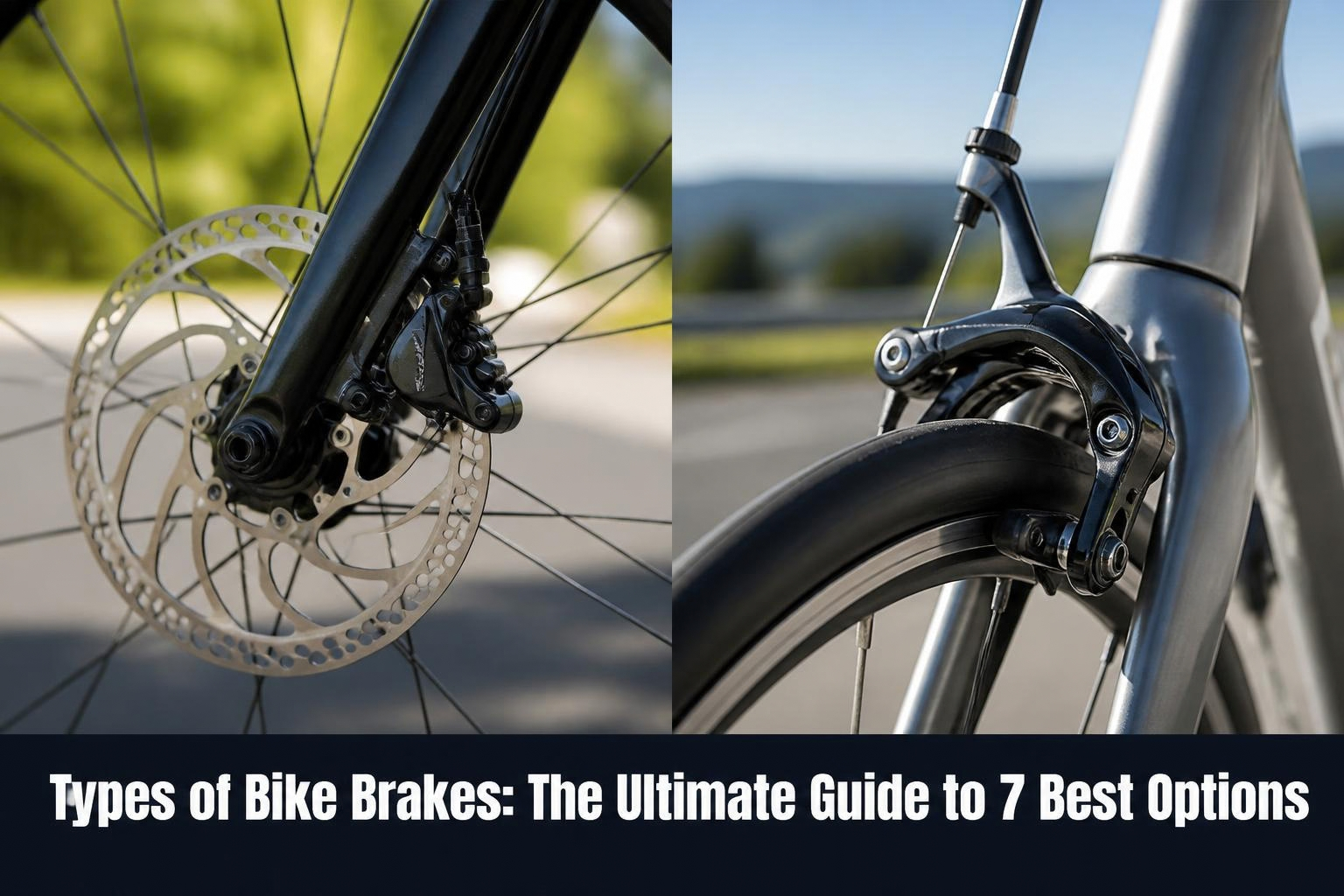
Understanding the types of bike brakes is the fastest way to stop guessing when you’re buying a new bike, upgrading an old one, or trying to figure out why yours feels weak. Every brake does the same basic job, turning motion into heat through friction. But how each design does it changes your stopping power, your wet-weather confidence, and how much maintenance you’re signing up for.
The list can feel overwhelming: rim brakes, V-brakes, cantilevers, mechanical discs, hydraulic discs, coaster brakes, drum brakes. This guide breaks down all seven, compares them side by side, and helps you match the right one to the way you actually ride.
Already own a bike and just want it to stop better? Start with our guide on how to adjust bike brakes for better stopping power, then come back here if you’re considering a change.
Affiliate disclosure: some links in this guide are eBay affiliate links. If you buy through them, BikeRushHub may earn a small commission at no extra cost to you.
Quick Answer
The main types of bike brakes fall into three families: rim brakes (caliper, V-brake, cantilever), disc brakes (mechanical and hydraulic), and hub brakes (coaster and drum). Hydraulic disc brakes deliver the most power and the best wet-weather control. Rim brakes are the lightest and simplest. Coaster and drum brakes are low-maintenance options for casual city riding.
In This Guide
- The Main Types of Bike Brakes at a Glance
- Rim Brakes: The Classic Types of Bike Brakes
- Disc Brakes: Mechanical vs Hydraulic
- Hub Brakes: Coaster and Drum
- Types of Bike Brakes Compared
- Which Type of Bike Brakes Is Right for You?
- Practical Tips Before You Buy or Upgrade
- Common Mistakes When Choosing Bike Brakes
- When You Should NOT Upgrade Your Brakes
- FAQ
The Main Types of Bike Brakes at a Glance
Bike brakes fall into three families, and the easiest way to tell them apart is to look at where the friction happens.
- Rim brakes squeeze rubber pads against the wheel’s rim. This family includes caliper brakes, V-brakes, and cantilevers.
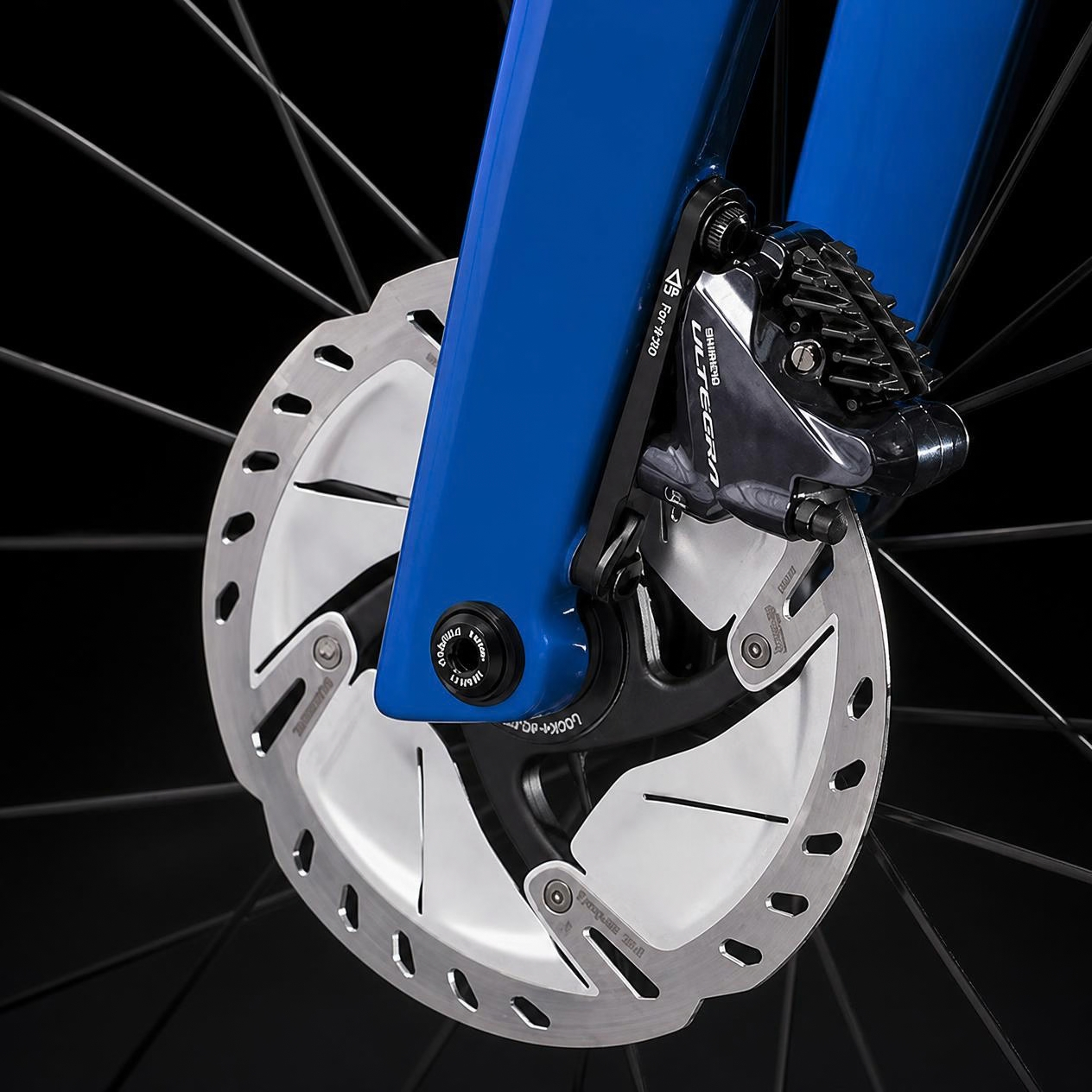
- Disc brakes clamp pads onto a metal rotor bolted to the wheel hub. They come in mechanical (cable) and hydraulic (fluid) versions.
- Hub brakes hide the braking mechanism inside the hub. Coaster brakes and drum brakes belong here.
Not sure which of the types of bike brakes your bike has? Look at the wheel. Pads touching the rim mean rim brakes. A small metal disc near the axle means disc brakes. Neither one, and maybe a chunky hub or a bike you brake by pedaling backward? That’s a hub brake.
Rim Brakes: The Classic Types of Bike Brakes
Of all the types of bike brakes, rim brakes use a part your wheel already has, the rim, as the braking surface. That’s why they’re light, cheap, and easy to service. The trade-off is that the rim sits close to the road, so it collects water, grit, and grime fast, and braking power drops when it’s wet.
Rim wear is another cost. Every stop removes a little rim material, and many rims include a wear indicator to show when the braking surface is getting thin. Once it’s gone, the wheel needs replacing, and that’s a bigger bill than a set of pads.
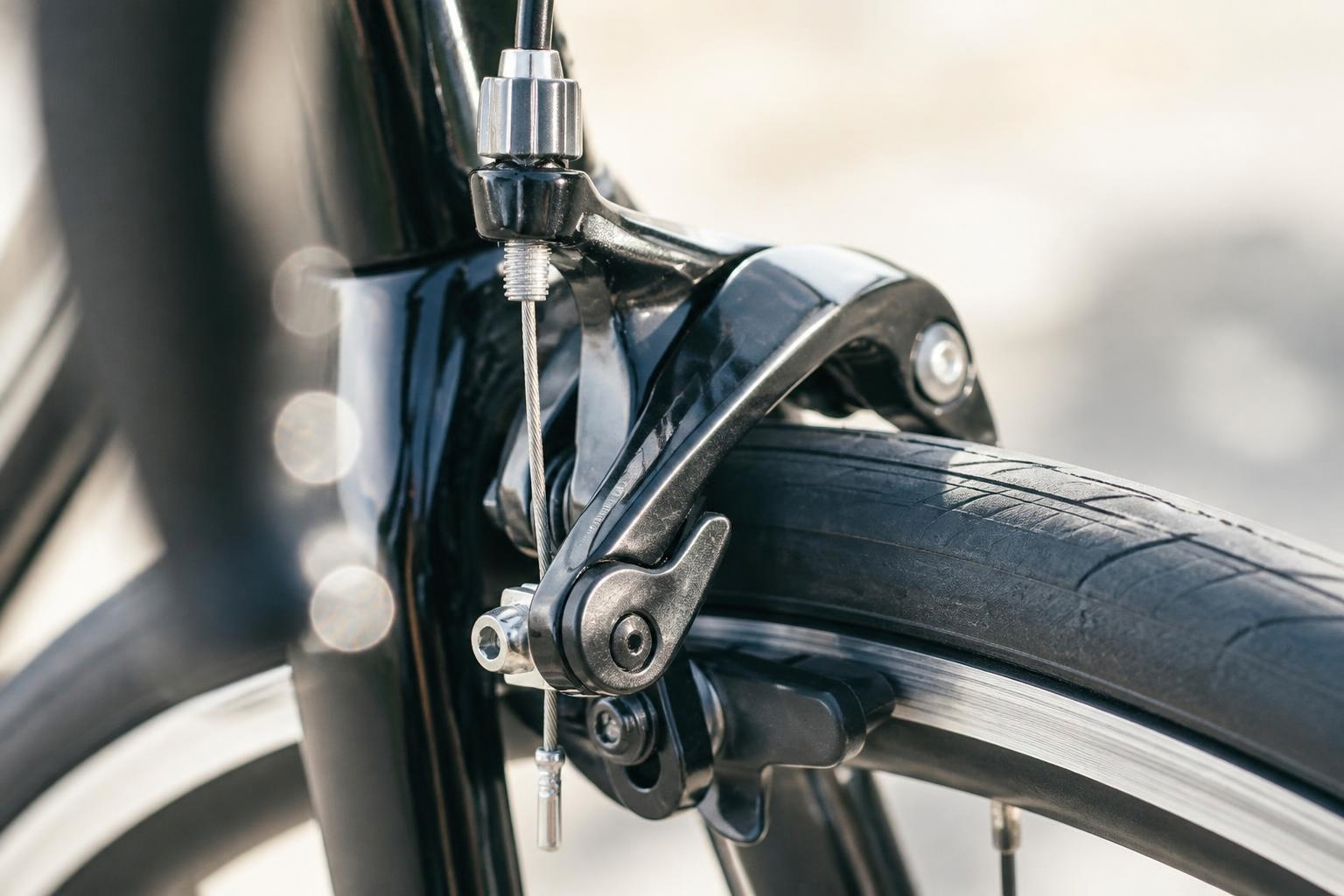 1. Caliper Brakes (Side-Pull and Dual-Pivot)
Caliper brakes are the traditional choice on road bikes. Two arms reach over the tire and squeeze the rim from both sides. Modern dual-pivot versions add a second pivot point for stronger, more even braking than older single-pivot designs.
They’re light and clean-looking, which is why they lasted so long on racing bikes. Their weak spots are limited tire clearance and reduced stopping power in the rain.
2. V-Brakes (Linear-Pull)
V-brakes have two long vertical arms mounted on the fork or frame, with the cable pulling them together. The long arms give strong leverage, which is why V-brakes became the standard on flat-bar commuter bikes, hybrids, and many older mountain bikes.
They’re easy to adjust and inexpensive to replace. If yours ever feels loose or uneven, the steps in our bike brake adjustment guide will cover it. Sheldon Brown’s classic article on adjusting direct-pull (V-brake) cantilevers is also worth bookmarking.
3. Cantilever Brakes
Cantilever brakes mount on posts on each side of the fork or seat stays, with a straddle cable joining the two arms. Their big advantage is generous mud clearance, which made them a favorite on touring bikes and traditional cyclocross builds.
The downside? They can be fiddly to set up, and their stopping power is usually lower than V-brakes. Today you’ll mostly find them on vintage or classic-style bikes.
Recommended Rim Brake Upgrades
Two easy fixes if your bike uses rim brakes. Always check that the size, mount, and pad shape match your setup before ordering.
V-Brakes (Linear-Pull)
A straightforward replacement for hybrids and commuter bikes that already have V-brake mounts. Confirm the arm length and mount style first.
Cartridge Brake Pads for Rim Brakes
Swap-in pads that often restore weak braking for far less than the cost of new brakes. Match the pad type to your brakes and rim material.
Disc Brakes: Mechanical vs Hydraulic
Among modern types of bike brakes, disc brakes move the braking surface away from the rim to a rotor mounted on the hub. That one change makes a big difference. The rotor stays cleaner, the braking surface isn’t damaged by wear on the wheel, and stopping power stays much more consistent in wet or muddy conditions.
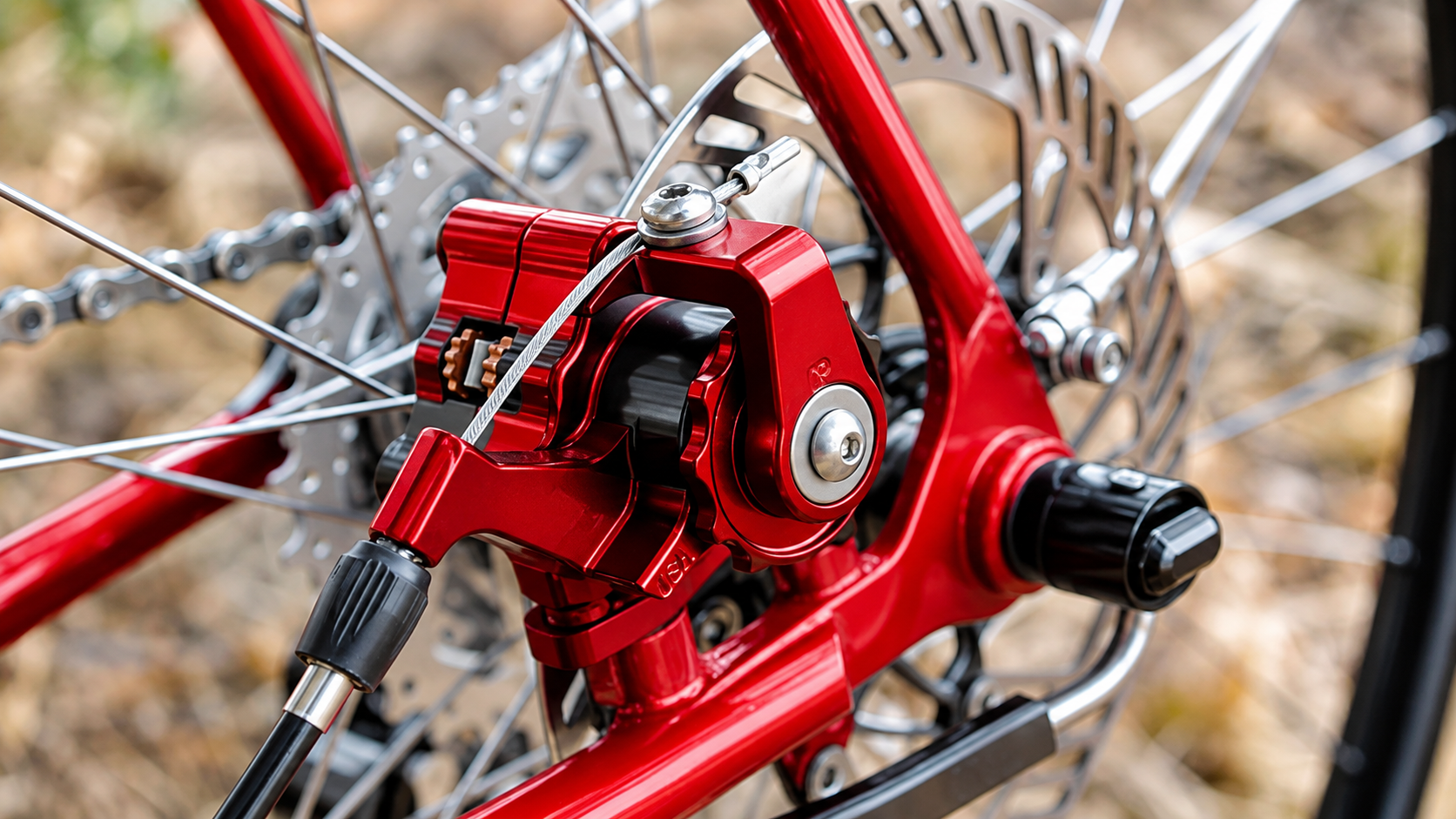 Disc brakes also let you use wider tires and don’t care if a rim gets slightly bent. The cost is a little extra weight and a system that’s more complex to service, especially the hydraulic kind.
4. Mechanical Disc Brakes
Mechanical disc brakes use a standard brake cable to pull the caliper’s pads against the rotor. You get the wet-weather bite of a disc without learning to bleed hydraulic fluid, and you can service the cable with the same basic tools you’d use on a rim brake setup.
They need more frequent adjustment as pads wear, and the lever feel isn’t as smooth as hydraulic. Still, for a commuter or budget build, they’re a practical middle ground. The pad clearance and caliper centering steps in our brake adjustment guide apply directly. For a visual walkthrough of setup, Park Tool’s mechanical disc brake alignment guide is a reliable reference.
5. Hydraulic Disc Brakes
Hydraulic disc brakes replace the cable with a sealed line of fluid. Squeeze the lever and the fluid pushes pistons in the caliper against the pads. The result is strong, smooth, easily controlled braking with very little hand effort, and the calipers compensate for pad wear on their own.
That’s why hydraulics are the go-to among the types of bike brakes for mountain biking, gravel, e-bikes, and cargo bikes, where loads and speeds are higher. The catch is service. Air in the line or old fluid means the system needs bleeding, and some brakes use mineral oil while others use DOT fluid. They aren’t interchangeable, so never mix them.
If you plan to service hydraulics yourself, a matching hydraulic brake bleed kit is essential, and it pays to follow your manufacturer’s procedures, such as Shimano’s official brake documentation.
If you’d like to see how alignment works on this type, Park Tool has a clear walkthrough in its hydraulic disc brake alignment guide.
Rotor Sizes, Mounts, and Pad Types
Disc brakes come with a few extra details worth knowing before you buy parts for any of these types of bike brakes.
- Rotor size: common sizes run from 140 mm to 203 mm. Larger rotors give more leverage and handle heat better, which matters on long descents or heavy bikes. Smaller rotors save weight.
- Mounts: calipers attach with either post mount or flat mount standards, and your frame and fork decide which one you need.
- Pad compound: resin (organic) pads are quieter and bite quickly but wear faster. Metallic (sintered) pads last longer and hold up better in mud and heat, though they can be louder.
When pads get thin, replacing them is straightforward. Our guide on how to replace bicycle brake pads walks through it.
Recommended Disc Brake Pads
Resin pads are quiet and bite quickly, which suits commuting and everyday riding.
Shimano Resin Disc Brake Pads
Resin (organic) pads for Shimano-style disc brakes. Always confirm the pad shape matches your exact caliper model before you buy.
Hub Brakes: Coaster and Drum
Hub brakes put the mechanism inside the wheel hub, sealed away from rain and road dirt. That makes them the lowest-maintenance types of bike brakes, but it also limits how much power and control they can offer.
6. Coaster Brakes (Back-Pedal)
Coaster brakes are what most of us learned on as kids. Pedal backward and the rear hub locks up to slow the bike. There’s no lever, no cable, and almost nothing to adjust.
That simplicity comes with limits. You get only rear braking, modulation is crude, and long descents can overheat the hub. If your chain drops, so does your braking.
Coaster hubs also make wheel removal a little more awkward, which is worth knowing before a roadside flat. Our guide on how to fix a flat bike tire is helpful to keep handy. For a broader look at hub and rim options, Sheldon Brown’s bicycle brake choices overview points out that every bike should have two brakes, since any single brake can fail.
7. Drum and Roller Brakes
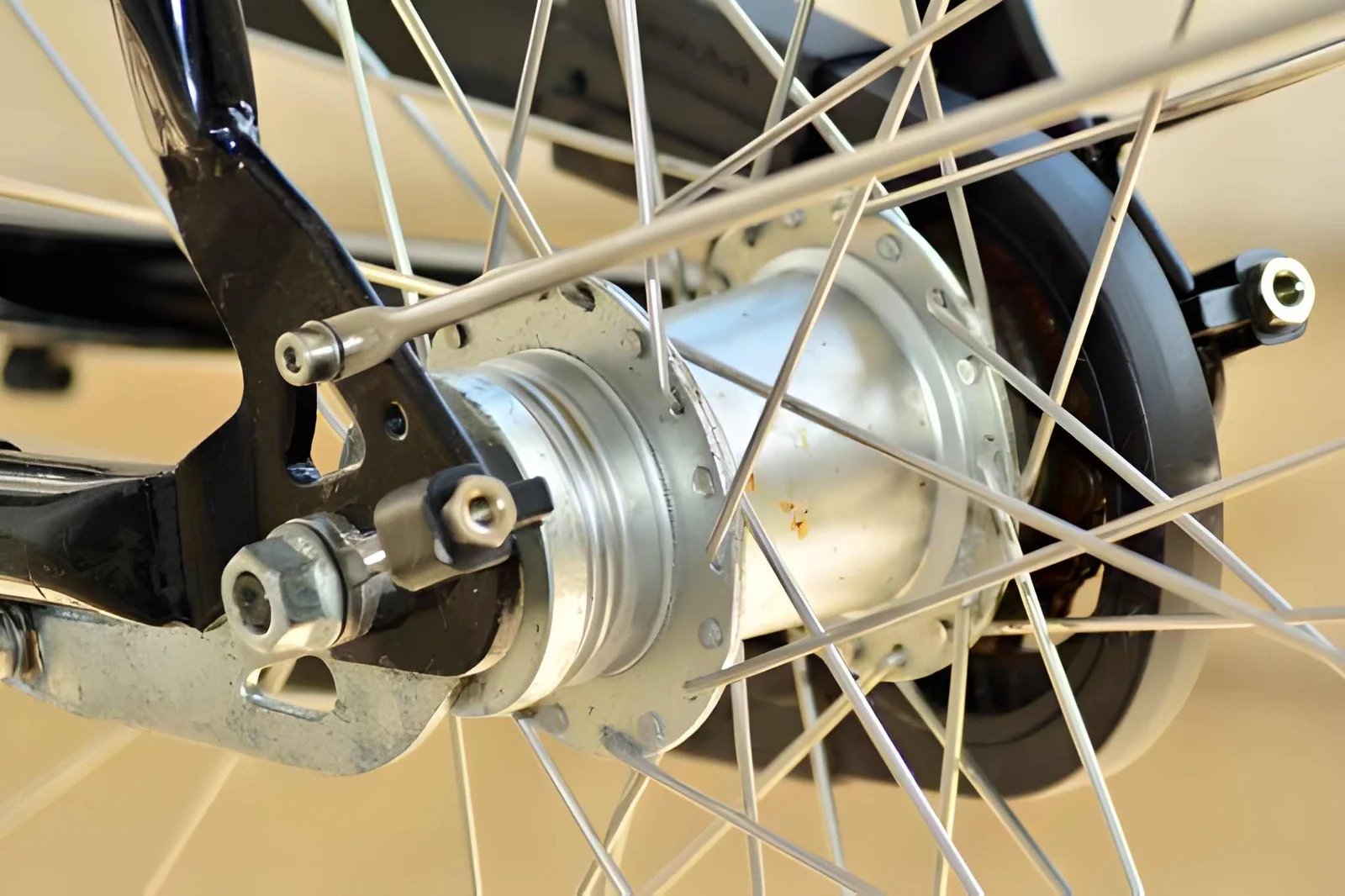
Drum brakes press internal shoes outward against the inside of a sealed hub shell. Roller brakes work on a similar sealed-hub principle. Both stay clean in rain and mud, need very little attention, and last for years, which explains why you see them on city and utility bikes and some cargo bikes.
They’re heavier than other options and generally offer less peak power than a good hydraulic disc. For relaxed commuting, though, many riders love them precisely because they’re forgettable. Sheldon Brown’s technical notes on bicycle drum brakes explain how they work and where their quirks lie.
 Types of Bike Brakes Compared
 Types of Bike Brakes Compared
Here’s how the main types of bike brakes stack up on the factors that matter most day to day.
| Brake Type | Stopping Power | Wet Performance | Maintenance | Weight | Best For |
|---|---|---|---|---|---|
| Caliper (rim) | Moderate | Low | Simple, frequent | Very light | Fair-weather road riding |
| V-brake (rim) | Moderate to good | Low | Simple, frequent | Light | Budget commuters, hybrids |
| Cantilever (rim) | Moderate | Low | Fiddly setup | Light | Touring, vintage builds |
| Mechanical disc | High | High | Moderate | Medium | All-weather commuting, DIY owners |
| Hydraulic disc | Very high | Very high | Occasional bleeding | Medium to heavy | Mountain, gravel, e-bikes, cargo |
| Coaster | Low | Good | Very low | Medium | Cruisers, casual riding |
| Drum / roller | Moderate | Very good | Very low | Heavy | City and utility bikes |
Which Type of Bike Brakes Is Right for You?
Don’t choose between the types of bike brakes by spec sheet alone. Pick by the rides you actually do. Here’s a quick way to narrow it down.
Quick Decision Guide
- Lightweight road bike, dry-weather rides: rim brakes (caliper) keep weight and cost down.
- Daily commuter through rain and traffic: mechanical disc or hydraulic disc for consistent stopping.
- Mountain biking or steep descents: hydraulic disc brakes with larger rotors.
- E-bike or cargo bike: hydraulic disc brakes. Extra weight and speed demand the most power and heat control.
- Casual cruiser or kid’s bike: coaster brakes are simple and forgiving.
- Low-maintenance city bike: drum or roller brakes if you value durability over speed.
- Touring or vintage restoration: cantilevers or V-brakes, depending on frame mounts.
 Thinking about an e-bike? Our complete e-bike buyer’s guide covers what to look for, and if you’re adding a motor to a bike you own, read our best e-bike conversion kits roundup first, because a stronger motor usually means your old brakes need an upgrade too.
Rim vs Disc: Which of These Types of Bike Brakes Wins?
If you ride in all weather, carry loads, ride e-bikes, or tackle long descents, disc brakes are the safer bet. If you want the lightest bike, ride mostly on dry roads, or want the simplest and cheapest setup to maintain, good rim brakes still work well.
Building a road bike from scratch? The decision often ties into your whole setup, which we cover in road bike build vs high-end groupset.
Practical Tips Before You Buy or Upgrade
Choosing among the types of bike brakes is only half the job. These habits protect your money and your safety.
- Check what your frame supports. Rim brake frames and disc brake frames have different mounts. You can’t simply bolt discs onto a frame that lacks disc mounts, and converting usually means a new fork, new wheels, and more cost than it’s worth.
- Match brakes to your real riding. Rainy commutes and hilly routes expose weak braking fast. A rim brake that feels fine on a dry Sunday can feel very different on a wet Tuesday.
- Bed in new disc brakes. New pads and rotors need a series of controlled stops to reach full power. Skipping this step is why many new disc brakes feel disappointing at first.
- Keep lube off the braking surface. Chain lube overspray is a common cause of sudden weak braking. Our bike chain cleaning and lubrication guide shows how to keep drivetrain work and brakes separate.
- Handle rotors carefully. Oily fingers and shop grease on a rotor can cause squeal and weak braking. Wipe rotors with a clean rag and isopropyl alcohol if they get contaminated.
- Don’t forget your other safety gear. Great brakes work best with a good adult bike helmet on your head.
Tools Worth Owning
Two tools that make brake work safer and cleaner if you like servicing your own bike.
Bike Torque Wrench (2-14 Nm)
A small-range torque wrench for caliper, rotor, and stem bolts, so you tighten to spec instead of guessing.
Hydraulic Brake Bleed Kit
For hydraulic disc brakes only. Make sure the kit and fluid match your system, because mineral oil and DOT fluid must never be mixed.
Common Mistakes When Choosing Bike Brakes
Assuming Disc Always Beats Rim
Discs are powerful, but a well-adjusted rim brake on a light dry-weather bike is perfectly safe. More power isn’t automatically better if you don’t need it.
Ignoring Rotor Size
A heavier rider, a loaded bike, or steep descents need bigger rotors. Undersized rotors overheat and fade, and that’s exactly when you need brakes most.
Mixing Hydraulic Fluids
Mineral oil and DOT fluid don’t mix. Using the wrong one can damage seals and ruin the brake. Always check what your brake uses before topping up or bleeding.
Buying Brakes That Don’t Fit the Frame
Not every one of the types of bike brakes fits every frame. Post mount versus flat mount, rim versus disc frame, rotor standard, and caliper adapters all matter. Confirm compatibility before you order.
Skipping Maintenance Because “It Works Fine”
Brakes fail slowly. Worn pads, stretched cables, and glazed rotors creep up on you. Regular checks cost minutes and prevent crashes.
When You Should NOT Upgrade Your Brakes
Sometimes the smartest move is to keep what you have instead of switching between types of bike brakes. Before you spend money on a new system, check these first:
- Your current brakes are just out of adjustment. A little cable tension or pad alignment can transform feel. Try that first.
- The pads are worn. Fresh pads (such as these cartridge pads for rim brakes) often fix weak braking for a fraction of the cost of new calipers.
- You mostly ride short, dry, flat routes. Rim brakes are more than enough, and upgrades add cost without real benefit.
- Your bike’s frame can’t accept discs. Forcing the issue can mean replacing the fork, wheels, and brakes together. At that point, a new bike may be the better investment.
Want to dial in what you already have? Revisit our brake adjustment guide before you open your wallet.
Ready to Gear Up?
Once your brakes are sorted, check out our picks for the top cycling gear right now, then plan your next ride.
Final Thoughts on the Types of Bike Brakes
There’s no single best option among the types of bike brakes, only the best one for your bike, your budget, and your riding. Hydraulic discs lead on power and control. Mechanical discs balance cost and reliability. Rim brakes win on weight and simplicity. Coaster and drum brakes trade performance for near-zero upkeep.
Whichever of the types of bike brakes you choose, keep the pads fresh, the surfaces clean, and the adjustment tight. A great brake ignored will always lose to an average brake that’s cared for.
Frequently Asked Questions About Types of Bike Brakes
What are the main types of bike brakes?
The main types of bike brakes are rim brakes (caliper, V-brake, and cantilever), disc brakes (mechanical and hydraulic), and hub brakes (coaster and drum).
Are disc brakes better than rim brakes?
Disc brakes generally offer stronger, more consistent braking, especially in wet or muddy conditions. Rim brakes are lighter, simpler, and cheaper to maintain, so “better” depends on how and where you ride.
What is the difference between mechanical and hydraulic disc brakes?
Mechanical disc brakes use a cable to pull the pads against the rotor. Hydraulic disc brakes use sealed fluid lines, which gives smoother lever feel, more power, and automatic compensation for pad wear, but they need occasional bleeding.
Which of the types of bike brakes is best for commuting?
For all-weather commuting, disc brakes are the safest choice, with mechanical discs offering a budget-friendly option and hydraulic discs offering the best control. Drum and roller brakes are also good for low-maintenance city riding.
What type of brakes do e-bikes use?
Most e-bikes use hydraulic disc brakes because the added weight and speed require more stopping power and better heat handling. Always check your e-bike’s brake rating and rotor size recommendations.
How can I tell which brakes my bike has?
Look at the wheel. Pads pressing on the rim mean rim brakes. A metal rotor near the hub means disc brakes. A sealed hub and pedaling backward to stop points to coaster or drum brakes.
Can I convert rim brakes to disc brakes?
Usually only if your frame and fork already have disc mounts. Otherwise, a conversion means new wheels, a new fork, and new brakes, which is often more expensive than buying a bike designed for discs.
