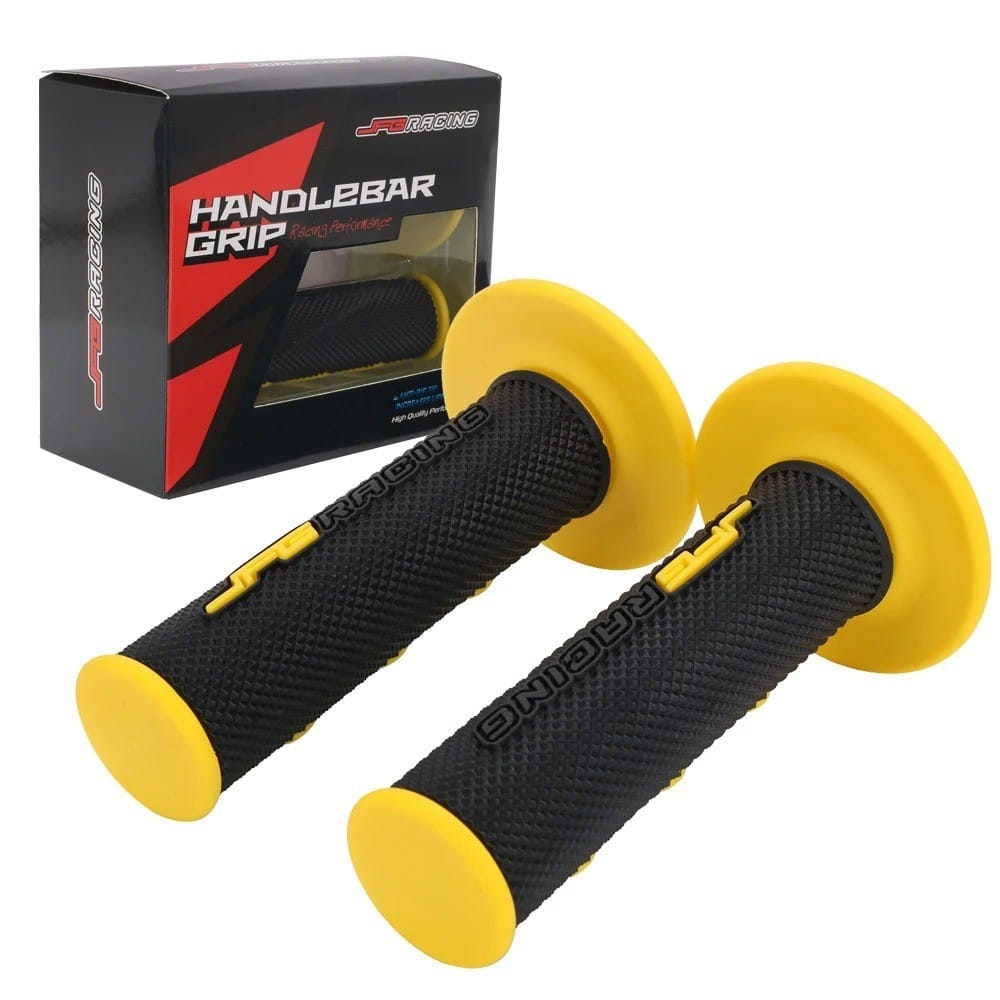
Nothing ruins a long ride faster than hand fatigue and grips that twist under your palm. Whether you’re on a dirt track or cruising the highway, the connection between your hands and the bars is where control actually happens — and worn or slipping grips undermine everything else on the bike.
The good news: motorcycle handlebar grips have moved past the era of contact cement and safety wire. Lock-on designs clamp mechanically to the bar, which means no glue, no drying time, and no grip spinning on you halfway through a wet ride.
Why Lock-On Motorcycle Handlebar Grips Beat Glue-On
Traditional slip-on grips rely on adhesive and sometimes safety wire to stay put. That works, until it doesn’t — heat, moisture, and time all work against the bond, and a grip that starts rotating under throttle is a genuine safety issue, not just an annoyance.
Lock-on grips take a different approach: the grip sits on a rigid inner sleeve, and a clamp at each end bolts down onto the bar. Slide on, tighten, done. Removal is just as simple when it’s time to replace them.
- No adhesive and no cure time — you’re not waiting overnight before riding.
- They come off cleanly — no cutting, no scraping old glue off the bar.
- Consistent position — the clamp holds the grip exactly where you set it.
Before you buy: check your bar diameter. These are listed for 7/8″ (22mm) bars, which covers most dirt bikes, pit bikes, and a lot of standard street bikes — but many cruisers and touring bikes use 1″ bars, and the two aren’t interchangeable.
Comfort and Vibration: What Grips Can and Can’t Fix
Hand numbness on long rides is a real problem, and grip choice is part of the picture. Softer rubber compounds absorb more engine and road buzz before it reaches your palms, and a grip with the right diameter reduces how hard you have to squeeze to maintain control.
That said, be realistic about what a grip swap does. Prolonged exposure to vibration through the hands is a recognized occupational health concern — hand–arm vibration syndrome is the clinical term — and if you’re getting persistent numbness or tingling that doesn’t clear up after a ride, that’s worth raising with a doctor rather than trying to solve with accessories alone.
For most riders, though, upgrading tired old motorcycle handlebar grips to a fresh set with decent vibration damping makes a noticeable difference on rides over an hour.
Grip Texture and Wet-Weather Control
A non-slip tread pattern matters most in exactly the conditions where you’d rather not think about it: rain, mud, or riding with gloves that have gotten damp. Deeper texturing gives gloved hands something to bite into, while smoother compounds tend to feel better bare-handed but give up grip when wet.
It’s a genuine trade-off, not a spec where more is always better. If you ride mostly in dry weather with thin gloves, an aggressive tread can feel harsh over a few hours. If you ride in the wet or off-road, textured motorcycle handlebar grips are the feature you’ll appreciate most.
| Feature | What It Means for You |
|---|---|
| Lock-on clamp | No glue or safety wire; install and remove in minutes |
| Rubber compound | Absorbs some engine and road vibration |
| Non-slip texture | Maintains control with wet or muddy gloves |
| 7/8″ (22mm) fitment | Fits most dirt bikes, pit bikes, and standard bars |
| Color options | Listed in red, blue, yellow, green, and orange |
Installing Lock-On Grips: What to Expect
Most riders finish a lock-on motorcycle handlebar grips swap in under fifteen minutes with basic hand tools. The general process:
- Remove the old grips. If they’re glued on, a flathead screwdriver plus a squirt of contact cleaner or soapy water breaks the seal. Cutting them off is fine too, since they’re being replaced.
- Clean the bar and throttle tube. Old adhesive residue keeps the new sleeve from seating flush.
- Slide on and align. Position the grip so the clamps clear your controls and the texture sits where your hand naturally rests.
- Tighten the clamp bolts. Snug, not cranked — these are small fasteners, and over-torquing can crack the clamp collar.
- Check the throttle. Before riding, confirm the throttle snaps closed freely and nothing binds.
Don’t skip the throttle check. A grip installed slightly too far inboard can bind the throttle tube against the switchgear. Spin the throttle and let it go — it should return fully closed on its own, every time, before the bike moves.
Who These Motorcycle Handlebar Grips Suit — and Who Should Look Elsewhere
- Good fit: dirt bike, pit bike, and standard street riders on 7/8″ bars who want a fast, glue-free upgrade.
- Good fit: riders replacing hardened, cracked, or spinning grips on a budget.
- Look elsewhere: riders on 1″ cruiser or touring bars — you need grips made for that diameter.
- Look elsewhere: anyone wanting heated grips or integrated bar-end weights, which are separate product categories.
Worth noting: grip choice is one part of rider comfort and control, but the Motorcycle Safety Foundation makes the broader point that training and proper protective gear do far more for your safety than any single accessory. New grips are an upgrade, not a substitute.
Frequently Asked Questions
Will these motorcycle handlebar grips fit my bike?
They’re listed for 7/8″ (22mm) handlebars, which covers most dirt bikes, pit bikes, and many standard street bikes. Measure your bar diameter before ordering — 1″ bars, common on cruisers and touring bikes, need a different grip.
Do lock-on grips really need no glue?
Correct. The grip is bonded to a rigid inner sleeve at the factory, and clamps bolt that sleeve to the bar. No adhesive, no safety wire, and no waiting for anything to cure before you ride.
How long does installation take?
Usually under fifteen minutes with basic hand tools. Most of that time is removing the old glued-on grips and cleaning residue off the bar, not fitting the new ones.
Will new grips fix hand numbness?
They can help, since fresh rubber absorbs more vibration than hardened old grips. But persistent numbness or tingling that lingers after a ride is worth discussing with a doctor rather than treating as a parts problem.
How often should motorcycle handlebar grips be replaced?
There’s no fixed schedule — replace them when the rubber hardens, cracks, goes glossy from wear, or starts rotating on the bar. On a regularly ridden bike, that’s often every couple of seasons.
Ready to Upgrade Your Cockpit?
If your current grips are hardened, cracked, or spinning under throttle, a set of lock-on motorcycle handlebar grips is one of the cheapest upgrades that changes how the bike feels every single ride.
Just confirm your bar diameter first, and check the current listing for color availability and shipping before you order.
Some links on this page may be affiliate links. BikeRushHub may earn a commission if you purchase through a qualifying link, at no additional cost to you.
